
Catterick Bridge Horse Races
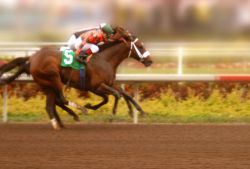
The great news for all horse racing fans is that it has never been easier to watch Catterick races live online with every race from Catterick Bridge racecourse available to watch via our partners.
Click To Watch (18+ #ad) Check Schedule (18+ #ad)Catterick Races Live Streaming
|
Here Is How To Watch Live Horse Racing With Bet365 Step 1: Click here to sign up to BET365.com 18+(A funded account/deposit is needed) (If you already have an account go to step 2 Step 2: Click on “Horse Racing”, found at the left hand side of the page, in the darker area for desktops or at the top of the page on mobile devices. Step 3: Find the race that is of interest to you and so long as a square with a > symbol appears, you can watch live. Step 4: Click on the text stating the race (on the left hand side) and then on the play symbol to watch along live. Click To Watch (18+) #ad Check Schedule (18+) #adPlease note: Geo-restrictions do apply, a funded account and/or bet placed 24 hours prior to game is required for access. You can watch live sport on your mobile, tablet or desktop including Football, Tennis and Basketball. All you need is a funded account or to have placed a bet in the last 24 hours to qualify. Geo location and live streaming rules apply. |
Choose Where To Watch
All of these bookies offer live Catterick Bridge races streaming, choose your favourite or simply the bookie requiring the lowest stake (the bet you need to place to watch live horse racing via the bookmaker).
Watch Racing Live Via
| NAME | LOCATIONS | DETAILS | ||
|---|---|---|---|---|
 |
*All GB and Ireland *Australia *USA *South Africa *France *Singapore |
Watch EVERY UK & IRE race at bet365. For races on At The Races, place a bet 24hrs prior or have a funded account to qualify. For any other UK tracks, place a qualifying bet of at least £0.50 win or £0.25 EW. Geo location, eligibility and live streaming rules apply. |  |
WATCH HERE (18+ #ad) |
 |
*Some GB *USA *South Africa *France |
Registration and deposited account needed. Minimum bet of £1 needed. Only available to eligible customers. Live Streaming rules apply. | |
WATCH HERE (18+ #ad) |
Catterick Bridge Races Live
The racecourse can trace its history back to 1783 when the first horse racing in Catterick was held.
The track at Catterick Bridge is left handed, with tight corners and an undulating topography that makes for interesting races and quite often, close finishers.
At just over a mile long and with a 3 furlong run in, Catterick Bridge races often favour horses with a strong finish and sprinters.
Catterick Bridge offers both National Hunt and Flat racing.
100% Legal Live Streams
All of the live horse racing streams featured on GGTV are 100% legal and 100% safe. Many websites feature illegal streams that simply steal the content direct from the likes of At The Races and Racing UK and whilst there may be a small cost to watch the races via legal streams (but let’s face it you are likely to be betting on the action anyway!) you can be sure that there are no computer viruses and/or other nasty’s infecting your computer/phone/tablet when watching.
So How is GGTV Different?
The streams that we feature here on GGTV are offered by bookmakers who have paid for the rights to bring you live horse racing action, so you can watch races that you have bet on.
What Can You Watch?
Different bookies have different services with some only focusing on the UK and Ireland whilst some bring you the action from all around the world. If you are after a specific race, please visit our preview section or for all races from a specific track, check out our track guides.
There is lots of great action held at the course each and every season with the vast majority of it been shown live on the steaming services found on this page.
The festive period is always one of the highlights of the calendar at the course with the track’s Christmas Meeting (usually held in the break between Christmas Day and the New Year) and its New Years Day meeting always enjoying bug crowds, top action and lots of interest.
That period in many ways acts as a lead in to the one of the biggest race days at Catterick when it hosts the North Yorkshire Grand National which takes place in mid-January.
The winter season ends with a Ladies Day before the start of the flat racing season which sees the Eater Meeting as one of the big early race days.
As one of the leading regions for horse racing, Yorkshire has its own country festival known as the Go Racing in Yorkshire Festival which the course participates in every season, usually for a July meeting.
August sees the courses family day’s which are always a popular day out and offers more family friendly atmosphere.
The flat season has its own Ladies Day, also held in the warmth of August with the next big race meeting come in October for The Catterick Dash meet.
That comes just before the flat season finale, usually in October before the big opener for the new Jump season, usually held in November.
You can also click on the bookies in the table above for all the info you need.
Watch Racing From Catterick Live
No matter if you know it as Catterick Bridge racecourse or simply as Catterick races, the course is one of the traditional northern racecourses and is a course full of history in one of the heartlands of British racing.
Racing in the area can be traced all of the way back to the mid-17th century with the first recorded day or racing taking place in 1783.
Permanent course in Catterick Bridge was established in 1813 and the current set up at the course includes the framework from the original 1906 grandstand.
Whilst lots of changes have taken place at the course, it is one that remains steeped in history and with both National Hunt and Flat racing on offer, it is something of a racetrack for purists.
It is no surprise that the North Yorkshire track is a popular one with long term fans and one that is well worth watching and best of all for fans is that bit has never been easier to do just that.
The course offers flat racing throughout the warmer summer months and National Hunt racing, including both steeplechase and hurdle races, throughout the colder winter months, so there is always something on offer for fans of racing when it comes to Catterick Bridge racecourse.
The track is left-handed and features both sharp bends and an undulating turf track of just over mile in circumference. With a short and sharp 3 furlong home straight, the action tends to be tight and exciting and offers a great test of both horse and jockey.
As one of the most Northern racecourses in England, the turf track at the course features a heavily gravelled sub-soil which gives great drainage and helps to make sure that racing continues no matter what the weather.
As you would expect from a course with so much history, there have been a number of standout moments that have happened at the course but in the modern era, the highlight has to be when Collier Hill, who went onto enjoy success across the globe, picked up its first ever win at the course in March 2002.
The biggest race meeting at the course happens in January when the North Yorkshire Grand National is run.
No matter if you want to watch that race or any other hurdle, flat or steeplechase race held at the course throughout he calendar year, you can do.
All of the live streaming services offered by the bookies featured on this page bring you each and every race from Catterick live online.
No longer do you need to be at the course in person, you can now simply watch all of the action via your phone, laptop, computer or tablet and best of all you can simply select to watch just the races that you want to watch.
There is a wagering requirement that needs to be met before you an watch the races live on the bookies featured here, but the chances are that if you are looking for a live stream of Catterick races, you are also interested in betting on the action, so why not choose to bet with one of these great bookies who allow you to watch along live?
If you have already bet with a bookie who doesn’t show you the action you have bet on, make sure your next bet is with one of these bookies and then you will be able to cheer on your chosen horses as it hopefully races down the short home straight at Catterick and onto victory.
Choose Where To Watch Racing From Catterick
All of these bookies offer live Catterick Bridge races streaming, choose your favourite or simply the bookie requiring the lowest stake (the bet you need to place to watch live horse racing via the bookmaker).
Watch Racing Live Via
| NAME | LOCATIONS | DETAILS | ||
|---|---|---|---|---|
|
*All GB and Ireland *Australia *USA *South Africa *France *Singapore |
Watch EVERY UK & IRE race at bet365. For races on At The Races, place a bet 24hrs prior or have a funded account to qualify. For any other UK tracks, place a qualifying bet of at least £0.50 win or £0.25 EW. Geo location, eligibility and live streaming rules apply. | |
WATCH HERE (18+ #ad) |
|
*Some GB *USA *South Africa *France |
Registration and deposited account needed. Minimum bet of £1 needed. Only available to eligible customers. Live Streaming rules apply. | |
WATCH HERE (18+ #ad) |
Catterick Bridge Races Today Live
If you are wanting to watch Catterick races today live online, then you can do just that via the great racing stream services found on this page.
History
p>Early origins: Racing at Catterick Bridge
The history of Catterick Racecourse stretches back more than two centuries, making it an established part of Yorkshire’s long association with horse racing. Located at Catterick Bridge in North Yorkshire, near Richmond and the Great North Road, the course developed in a region where horses were central to transport, agriculture, hunting and sporting life.
Racing in the Catterick Bridge area is believed to have taken place as early as the mid-seventeenth century, although the first officially recorded meeting was held on 22 April 1783. This date marks an important milestone in the venue’s history and places Catterick among Britain’s long-established racecourses.
During the eighteenth century, organised horse racing was becoming increasingly popular throughout Yorkshire. Meetings provided opportunities for owners to test their horses, spectators to enjoy sporting competition and local communities to gather for social occasions. Catterick’s position in the north of England helped it develop as a regional racing venue, serving people from surrounding towns and the countryside.
1813: The creation of a permanent racecourse
Although the first recorded meeting took place in 1783, Catterick did not acquire a permanent course until 1813. Establishing a dedicated venue was an important step in the development of organised racing, providing a more consistent setting for meetings and allowing the facilities to improve over time.
The racecourse gradually became an established fixture in the Yorkshire sporting calendar. During the nineteenth century, racing developed into a more structured industry, with formalised race programmes, improved spectator arrangements and growing participation from owners and trainers. Catterick benefited from this wider expansion while retaining its character as a regional course.
Its location also placed it within a wider network of Yorkshire racing venues. The county has a particularly rich racing heritage, including historic courses at York, Doncaster, Beverley and Ripon. Catterick’s contribution was to provide regular racing opportunities in North Yorkshire, allowing horses to compete outside the major meetings and giving local spectators a venue close to home.
1888: Admission charges and changing race-day arrangements
One interesting detail in Catterick’s history concerns the introduction of an entrance fee for the general public in 1888. Before then, spectators had generally been charged only for access to the stand. The introduction of a broader admission charge reflected the gradual formalisation of racecourse management and the costs associated with operating organised sporting events.
Racecourses were increasingly developing defined enclosures and spectator facilities, creating different experiences for visitors depending on where they watched the racing. These changes helped establish the commercial structure that supports modern race meetings, where admission, hospitality and catering all contribute to the running of the venue.
Although today’s ticketing systems are considerably more sophisticated, the basic principle remains familiar: spectators pay for access to the racing and facilities, with different packages available to suit different budgets and preferences.
1906: The grandstand opens
A major milestone arrived in 1906, when Catterick Racecourse opened a grandstand designed to accommodate more spectators and improve the race-day experience. The building marked a significant development in the venue’s infrastructure and helped raise its profile as an established racing destination.
The original grandstand’s framework remains evident in the present Grandstand, despite numerous alterations and improvements over the years. This surviving element provides a tangible connection between the modern racecourse and its early twentieth-century development.
Grandstands became increasingly important as race meetings attracted larger crowds. They provided elevated viewing positions and shelter, helping spectators follow the action more comfortably. At Catterick, the building represented a commitment to improving facilities while continuing to serve the local racing community.
1923: The Catterick Racecourse Company
In 1923, the Catterick Racecourse Company was formed to operate the venue. The establishment of the company gave the racecourse a formal management structure and helped secure the continuity of racing at Catterick.
The company has remained associated with the operation of the racecourse ever since. Over the decades, it has overseen improvements to facilities and the ongoing development of the fixture list, balancing the demands of modern racing with the venue’s traditional character.
The early twentieth century was an important period for British racing more generally. Improvements in transport, course management and the organisation of meetings helped racecourses attract visitors and establish stronger identities. Catterick continued to develop within this changing environment, retaining its place as a popular regional venue.
Developing a dual-purpose racecourse
One of Catterick’s defining characteristics is its role as a dual-purpose racecourse, hosting both flat racing and National Hunt racing. Flat racing takes place without obstacles, with horses competing over measured distances that test speed, stamina and tactical positioning. National Hunt racing involves hurdles or fences and requires horses to combine athleticism with accurate jumping.
The two disciplines give Catterick a varied calendar throughout the year. The flat season generally features meetings during spring, summer and autumn, while the jump season brings racing during the colder months. This programme provides opportunities for different types of horses and allows the venue to welcome racegoers in every season.
The course itself is left-handed, sharp and undulating, creating a distinctive test for horses and jockeys. Its five-furlong straight is particularly associated with sprint racing, while the National Hunt course provides a different challenge over obstacles. Course conditions and the ability to handle the turns and gradients can influence the outcome of races, making familiarity with the track valuable for racing professionals.
The Catterick Dash and the North Yorkshire Grand National
Over time, particular races have helped define Catterick’s identity. The Catterick Dash is a notable feature of the flat racing calendar, associated with the course’s five-furlong sprint track. Sprint races demand rapid acceleration and the ability to maintain speed over a short distance, giving spectators a fast-moving contest in which small differences can decide the result.
The North Yorkshire Grand National provides a contrasting test during the jump season. This staying contest demands endurance and accurate jumping, requiring horses to conserve their energy over a longer distance. It reflects the course’s importance as a venue for National Hunt racing and offers a different spectacle from the sharp pace of the Catterick Dash.
These feature races contribute to the venue’s identity and give visitors particular meetings to look forward to. They also demonstrate the variety of racing available at Catterick, where the calendar moves between high-speed flat contests and the stamina-testing challenges of jump racing.
Collier Hill: A successful horse with Catterick connections
Catterick has played a part in the development of horses that went on to achieve success at a much higher level. One notable example is Collier Hill, who made an early mark with a victory at the course before building an international racing career.
Collier Hill subsequently won several major international races, including the Hong Kong Vase, the Irish St Leger and the Canadian International Stakes. These victories demonstrated his ability to compete successfully across different countries and racing environments.
His story illustrates the contribution regional racecourses make to the sport. While major championship meetings attract the largest audiences, smaller and mid-sized venues provide valuable opportunities for horses to gain experience and establish their reputations. An early success at Catterick can be one step in a much longer racing journey.
Catterick Racecourse in the modern era
Today, Catterick Racecourse is recognised as one of the established venues in the northern racing scene. The official racecourse describes its programme as approximately 27 meetings a year, traditionally comprising 17 flat meetings and 10 National Hunt meetings. The exact fixture schedule can change, so visitors should consult the current official calendar when planning a visit.
The racecourse combines its historic grandstand with modern improvements to facilities and hospitality. Visitors can choose from admission packages, different enclosures and hospitality options, while catering facilities provide food and drink throughout race days. The venue’s informal atmosphere remains an important part of its identity.
Catterick also maintains links with its surrounding community. Its location close to Catterick Garrison has supported relationships with military personnel and local organisations. The racecourse has highlighted its involvement in charitable events and educational initiatives, including Racing to School, which introduces young people to racing through outdoor learning activities.
Its accessibility from the A1 makes Catterick a practical destination for visitors from across North Yorkshire and beyond. The racecourse continues to attract regular racegoers as well as people discovering horse racing for the first time.
From the first recorded meeting in April 1783 to the modern fixture list, Catterick Racecourse has evolved alongside British horse racing. The permanent course established in 1813, the grandstand opened in 1906 and the creation of the racecourse company in 1923 all helped shape the venue’s development.
More than two centuries after its earliest recorded racing, Catterick remains a place where sporting tradition meets modern entertainment. Whether visitors arrive for the Catterick Dash, the North Yorkshire Grand National or an ordinary afternoon meeting, they experience a racecourse with a distinctive history and a continuing role in Yorkshire’s racing community.

